
Construction sites are constantly changing environments. Materials move from one location to another, temporary electrical systems are installed, contractors work in different areas, and unfinished structures may have limited access or incomplete fire-protection systems. These conditions make fire safety an important responsibility for every construction business.
A construction site’s risks can also change from one project stage to another. A site during excavation and structural work has different hazards from a site where interior finishing, electrical installation, painting, or equipment installation is taking place.
The Building Code of Pakistan Fire Safety Provisions 2016 establishes fire-safety principles focused on life safety, property protection, and public welfare. It also emphasizes that building safety should not depend on a single safeguard and that appropriate safeguards should consider factors such as occupancy, building characteristics, fire protection, and emergency response capabilities.
A strong construction-site safety program should therefore develop alongside the project rather than waiting until the building is complete.
Identify Fire Hazards Before Work Begins
The first step is identifying potential fire hazards.
Construction sites can contain combustible packaging, timber, insulation, fabrics, plastics, building materials, temporary structures, fuels, electrical equipment, and other materials. Hot-work activities and temporary electrical installations can also require specific safety controls.
A site assessment should consider:
- Materials stored on-site
- Temporary electrical systems
- Machinery and equipment
- Waste and packaging
- Storage arrangements
- Work involving heat or sparks
- Temporary buildings and offices
- Access for emergency responders
- Emergency exits and routes
- Existing fire-protection equipment
The assessment should be reviewed regularly because construction conditions change as work progresses.
Keep Construction Materials Properly Managed
Construction materials should be stored in an organized manner that does not create unnecessary fire hazards or block emergency routes.
Combustible materials should not be allowed to accumulate unnecessarily. Waste, cardboard, packaging, wood scraps, and other debris should be removed through the site’s established waste-management process.
Storage should also be arranged so that workers can safely move through the site and emergency access is not unnecessarily restricted.
Good housekeeping is one of the simplest ways to support fire prevention, but it needs consistent supervision.
Pay Attention to Temporary Electrical Systems
Construction projects frequently use temporary electrical installations before permanent systems are completed.
These temporary arrangements should be installed and maintained by qualified personnel. Damaged cables, unsuitable connections, overloaded circuits, and poorly protected electrical equipment can create unnecessary hazards.
Electrical systems should be inspected as the project develops, especially when additional equipment or temporary work areas are added.
Construction managers should also ensure that electrical equipment is used according to manufacturer instructions and the site’s established safety procedures.
Manage Hot Work Carefully
Some construction activities can produce heat, sparks, or open flames. Examples may include welding, cutting, grinding, and other specialist work.
These activities should be controlled through the site’s appropriate safety procedures and performed by trained workers under suitable supervision.
Before hot work begins, the surrounding area should be assessed for combustible materials and other hazards. The work area should also have appropriate fire-protection arrangements based on the site’s risk assessment.
Workers should never assume that an activity is safe simply because it has been performed many times before.
Provide Appropriate Fire Extinguishers
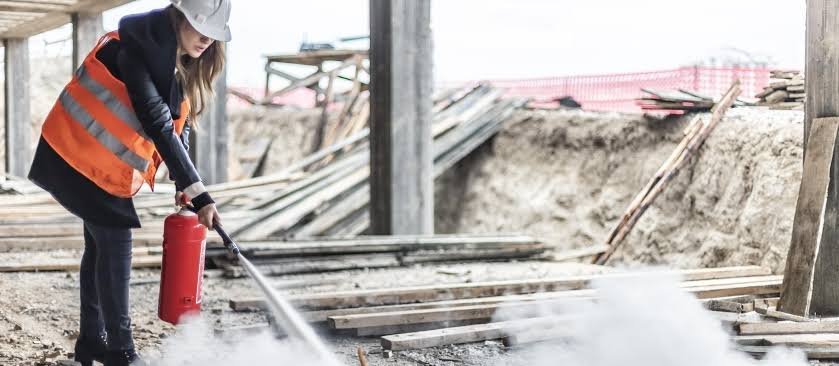
Portable fire extinguishers are an important part of many construction-site fire-safety programs.
The type, number, and placement of extinguishers should be determined according to the hazards present and applicable requirements. Equipment should be clearly identified, accessible, and maintained.
Extinguishers should not be buried behind materials, locked away without an appropriate access arrangement, or placed where workers cannot easily identify them.
Workers should receive appropriate safety information about the site’s emergency procedures. They should not be expected to confront a dangerous or rapidly spreading fire. Evacuation and contacting emergency responders should remain the priority when conditions are unsafe.
Consider Fire Detection During Construction
A completed building may eventually have a permanent fire detection system, but construction sites can remain occupied and active long before the permanent system is operational.
The appropriate temporary or permanent detection arrangements depend on the project, construction stage, building type, and applicable requirements.
As the structure develops, management should review whether existing detection and alarm arrangements remain appropriate.
A reliable fire alarm system in Pakistan can provide early warning in buildings where it is installed and maintained according to the applicable design and safety requirements. Flame Defender describes professional fire alarm solutions for industrial, commercial, and residential properties, including conventional and addressable systems, with installation, testing, maintenance, and upgrade services.
Plan the Permanent Fire Alarm System Early
Fire alarm planning should not always be left until the final stage of construction.
The building’s eventual fire detection requirements can affect wiring routes, device locations, control-panel arrangements, notification equipment, and other design decisions.
Planning early can help reduce the risk of expensive modifications later.
For larger or more complex projects, an addressable system may provide detailed information about the location of an activated device. The appropriate system, however, should be selected according to the building design, risk assessment, applicable standards, and professional engineering requirements.
Keep Alarm and Detection Equipment Maintained
A fire alarm is only useful if it can perform its intended function.
Construction dust, debris, humidity, accidental damage, and ongoing building work can affect equipment if it is not appropriately protected and maintained.
As construction progresses, detectors, cables, control panels, manual call points, sounders, and other components should be checked according to the applicable maintenance and testing procedures.
Flame Defender notes that fire alarm maintenance can include cleaning, testing, calibration, and identifying components that are no longer performing properly.
Construction managers should also ensure that workers do not accidentally damage installed fire-safety equipment while carrying out other work.
Maintain Clear Emergency Routes
Construction sites can have changing access routes, temporary stairs, unfinished corridors, scaffolding, stored materials, and other obstacles.
Emergency routes need regular review.
The Building Code of Pakistan Fire Safety Provisions states that means of egress in occupied buildings should be maintained free and unobstructed and that routes to exits should be clearly indicated.
Construction managers should therefore ensure that temporary changes do not create confusion about how workers should leave the site during an emergency.
As different areas become occupied, their evacuation arrangements should be reviewed accordingly.
Make Emergency Exits Easy to Identify
Workers may spend only part of their working day in a particular area and may not know the entire site layout.
Clear exit signs and appropriate emergency information can help workers identify safe evacuation routes.
This is especially important on large construction projects where workers, subcontractors, engineers, inspectors, and visitors may all be present.
Emergency arrangements should be communicated clearly to everyone who is expected to work on or visit the site.
Create an Emergency Assembly Area
Construction businesses should establish an appropriate location where people can gather after evacuating.
An assembly area can help supervisors and site management account for workers and identify whether someone may still be inside.
The location should be selected with the site’s changing conditions in mind. It should not interfere with emergency vehicles or create another safety problem.
As the project develops, management should review whether the assembly point remains suitable.
Consider Workers, Contractors, and Visitors
A construction site may involve many different organizations.
Main contractors, subcontractors, suppliers, consultants, inspectors, temporary workers, and visitors may all have different levels of familiarity with the site.
Fire-safety information should therefore be communicated to everyone who needs it.
New workers should understand the site’s emergency arrangements before beginning work. Contractors should also be made aware of relevant site rules.
A strong safety culture depends on everyone understanding their responsibilities.
Provide Emergency Communication
A fire alarm provides an important warning, but large construction projects may also need other communication methods.
For larger sites, emergency communication systems can help provide instructions to workers across different areas.
Public-address systems can be integrated with fire alarm infrastructure in suitable facilities. Flame Defender describes public-address solutions for factories, commercial facilities, and other large properties where emergency announcements may form part of a wider life-safety strategy.
The communication method should be selected according to the size, layout, occupancy, and requirements of the project.
Plan for Different Construction Stages
A construction site’s fire risks can change significantly over time.
Structural Stage
During structural work, temporary electrical equipment, stored materials, temporary access routes, and incomplete building sections may be important considerations.
Interior Work
During interior construction, additional combustible materials, packaging, finishes, and equipment may be introduced.
Electrical and Mechanical Installation
As electrical and mechanical systems are installed, additional equipment and temporary connections can change the risk profile.
Finishing Stage
Painting, finishing materials, furniture, fixtures, and other contents may increase combustible loading.
Final Occupancy Preparation
Before the building is occupied, permanent fire alarms, emergency lighting, exits, suppression systems, and other required safety features should be properly commissioned and ready for use according to the approved design and applicable requirements.
The safety plan should evolve with each stage.
Keep Fire Protection Equipment Accessible
Construction activities can unintentionally block safety equipment.
Fire extinguishers, alarm points, emergency exits, and other safety systems should remain accessible.
When equipment is temporarily relocated because of construction activities, the site safety team should ensure that suitable arrangements remain available.
Workers should also be instructed not to use fire-protection equipment locations as convenient storage spaces.
Consider Fire Suppression Systems
Some construction projects may require permanent or temporary suppression arrangements depending on the building and hazards.
Suppression systems can include water-based systems and specialized systems designed for specific applications.
Flame Defender describes suppression services that include risk assessment, system design, equipment supply, installation, commissioning, inspection, testing, preventive maintenance, and servicing.
The appropriate system should be determined by qualified professionals based on the building, hazard, occupancy, and applicable requirements.
Protect Temporary Offices and Storage Areas
Construction sites often have temporary offices, storage rooms, worker facilities, and other structures.
These areas should be included in the fire-safety assessment.
Temporary buildings can be overlooked because they are not part of the final structure, but people may still work or store materials inside them.
Fire detection, extinguishers, electrical safety, emergency routes, and other safeguards should be considered according to the risks present.
Maintain Access for Emergency Responders
Emergency responders need reasonable access to the site.
Construction fencing, gates, stored materials, temporary structures, parked vehicles, and changing site layouts can affect access.
Site management should ensure that emergency access arrangements are included in the project’s emergency plan.
Relevant personnel should know how emergency responders can enter the site and where key areas are located.
Keep Construction Records
Documentation is an important part of construction-site safety.
Useful records may include:
- Fire-risk assessments
- Equipment inspections
- Fire alarm testing
- Extinguisher servicing
- Emergency drills
- Worker safety briefings
- Electrical inspections
- Hot-work procedures
- Corrective actions
- Fire-safety system commissioning records
Good records help management track whether identified problems have been addressed.
They can also provide useful information when responsibility changes between project teams.
Conduct Safe Emergency Drills
Workers should understand how to respond to an emergency before a real incident occurs.
Where drills are appropriate or required, they should be conducted safely and according to the project’s emergency procedures.
Drills should focus on evacuation, communication, accountability, and identifying weaknesses in the plan. They should never involve real flames, smoke, or other dangerous simulations.
The Building Code of Pakistan Fire Safety Provisions includes requirements for emergency egress and relocation drills for applicable occupancies, including maintaining written records of drills.
After a drill, management can review what worked and what needs improvement.
Train Site Supervisors
Supervisors play an important role because they are often responsible for coordinating workers during normal operations.
They should understand the site’s fire-safety arrangements, emergency communication methods, evacuation routes, assembly areas, and reporting procedures.
Training should also make clear that workers should not take unnecessary risks during an emergency.
The goal is to move people away from danger and allow trained emergency responders to manage serious incidents.
Review Fire Safety After Major Changes
A construction site’s fire-safety plan should be reviewed whenever there are significant changes.
Examples include:
- A new floor becoming occupied
- Major changes to access routes
- New storage areas
- Installation of new equipment
- Changes in electrical systems
- Changes in hot-work activities
- Changes in the number of workers
- Installation or relocation of fire equipment
A safety plan that was appropriate at the beginning of construction may not remain suitable several months later.
Do Not Depend on One Safety Measure
One of the most important principles of fire safety is that protection should not depend on a single system.
The Building Code of Pakistan Fire Safety Provisions specifically emphasizes multiple safeguards and states that life safety and property protection should not depend solely on one safeguard.
For a construction business, this means combining prevention, housekeeping, detection, alarm notification, emergency communication, evacuation planning, fire equipment, appropriate suppression, and professional emergency response.
If one measure becomes unavailable, other safeguards can still provide additional protection.
Use Professional Fire Safety Services
Construction fire protection can become technically complex as a project grows.
Professional fire-safety specialists can help with risk assessment, system design, installation, testing, commissioning, maintenance, and upgrades.
For example, Flame Defender states that it provides fire alarm engineering, installation, testing, maintenance, and upgrades for industrial and commercial properties across Pakistan.
Professional support is particularly valuable for large construction projects where fire protection needs to be coordinated with building design and changing site conditions.
Final Thoughts
Construction sites are dynamic workplaces, so fire safety cannot be treated as a one-time task. Risks can change as materials arrive, temporary systems are installed, new workers join the project, and different construction phases begin.
A strong construction fire-safety program should identify hazards early, maintain good housekeeping, manage electrical and hot-work risks, keep emergency routes accessible, provide appropriate fire equipment, establish clear evacuation procedures, and ensure that detection and alarm systems are properly designed and maintained.
A reliable fire alarm system in Pakistan can provide important early warning, but it should be part of a broader safety strategy rather than the only protection measure. The Building Code of Pakistan Fire Safety Provisions emphasizes multiple safeguards appropriate to the building and its occupants.
For businesses planning fire detection or protection systems, Flame Defender provides fire alarm installation, maintenance, testing, and upgrade services for commercial and industrial properties.
Ultimately, effective construction-site fire safety protects more than buildings and equipment. It helps create a safer environment for workers, contractors, visitors, and everyone who will eventually use the completed property.
FAQs
1. Why is fire safety important on construction sites?
Construction sites contain changing hazards, temporary electrical systems, combustible materials, machinery, and work activities that can increase fire risk. A structured fire-safety plan helps reduce risks and prepares workers to respond safely.
2. Does a construction site need a fire alarm system?
The appropriate detection and alarm arrangements depend on the project’s size, construction stage, occupancy, hazards, and applicable requirements. Where an alarm system is required or appropriate, it should be professionally designed, installed, tested, and maintained.
3. What are common fire hazards on construction sites?
Common concerns can include combustible materials, accumulated waste, temporary electrical systems, hot-work activities, machinery, unsuitable storage, and inadequate housekeeping. The exact risks vary between projects.
4. How can construction companies improve fire safety?
Companies can conduct regular risk assessments, maintain good housekeeping, keep exits clear, manage hot work appropriately, maintain electrical systems, provide suitable fire equipment, train workers, and regularly review emergency arrangements as construction progresses.
5. Who should handle fire alarm installation and maintenance?
Fire alarm systems should be designed, installed, tested, and maintained by appropriately qualified professionals. The correct approach depends on the building, site conditions, applicable standards, and the requirements of the approved fire-safety design.